
Article by Sabine Iovu.
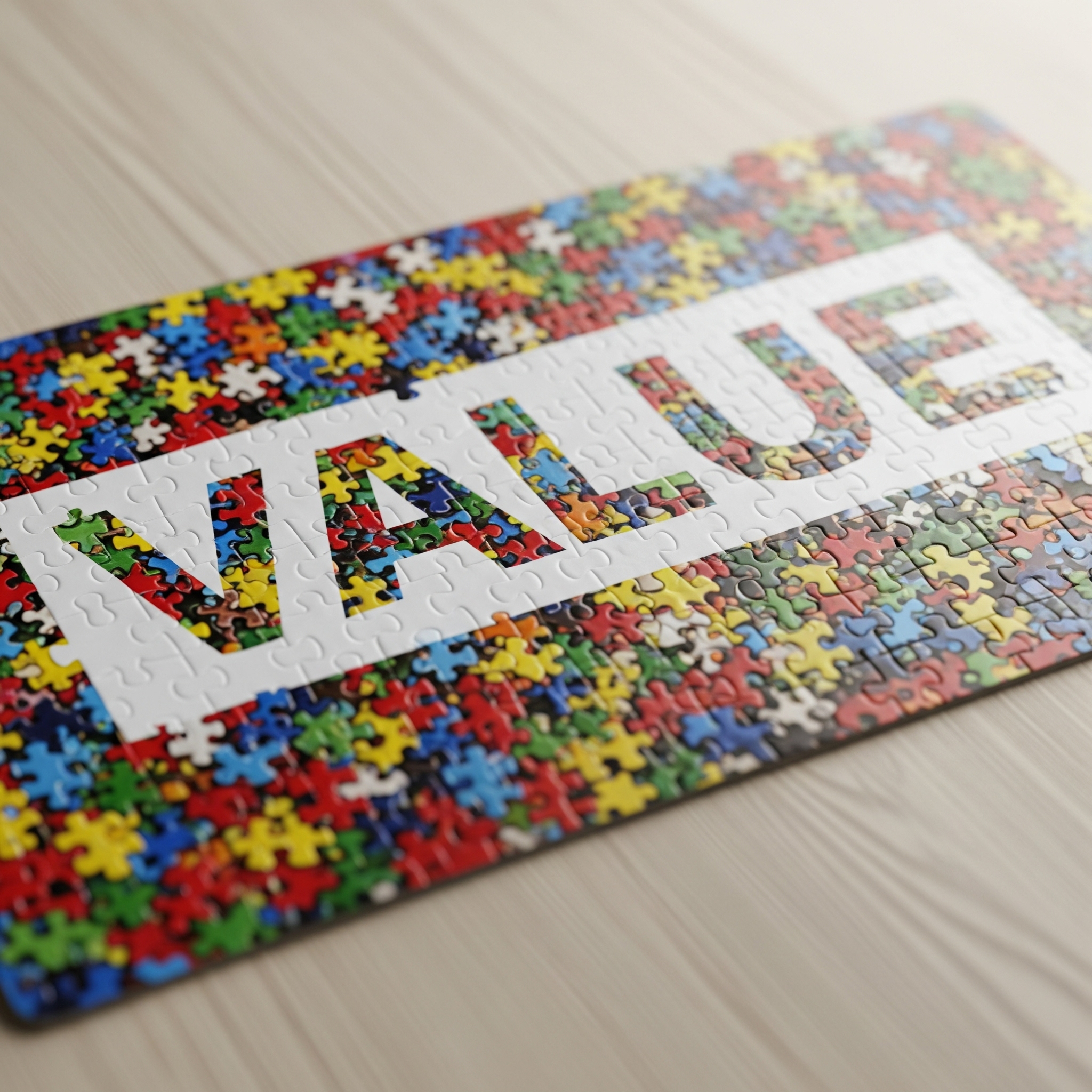
Value. It's a deceptively simple word, isn't it? We toss it around with ease: ‘good value’, ‘add value’, ‘true value’. Yet, its essence is as elusive and multifaceted as a diamond in the rough. It resonates deeply, not just in boardrooms, balance sheets or movies, but in the quiet spaces of human interaction, in the simple act of understanding.
At its core, value is about worth. But worth, unlike a fixed price tag, is inherently subjective. What one person esteems, another might dismiss. A worn, faded photograph of a grandparent is priceless to their kin, yet holds no monetary appeal to an antique dealer. Here, value is not only utility or rarity. It’s meaning. And meaning, well, that's where the stories lie.
We must think of value in terms of investment, not just financial, but of time, effort, and emotion. We value what we've poured ourselves into. A meticulously crafted piece of furniture holds more value for its maker than a mass-produced item. A skill painstakingly honed over years carries a different weight than a fleeting trend. This kind of value is born from sweat, from dedication, from the very act of creation. It's the intrinsic worth imbued by human endeavour.
Value in a globalized world
This exploration of value might seem abstract, but its implications are profoundly practical, especially in our interconnected world. Consider a bridge. Its value isn't merely the concrete and steel, but the connections it facilitates, the journeys it makes possible, the barriers it overcomes. Similarly, in the world of words, value is about bridging world, it's about ensuring a message, whether it's a heartfelt marketing campaign or a crucial legal document, carries its full weight and intent across cultural divides.
The real worth here lies in the authenticity of the connection. Imagine a piece of software, brilliant in its native tongue, yet clunky and obtuse when simply transliterated for a global audience. The value drains away, replaced by frustration and miscommunication. It's the difference between a direct, albeit awkward, handshake and a warm, culturally appropriate greeting. One gets the job done, while the other builds rapport.
Empathy as a value proposition
This is where the idea of value becomes almost empathetic. Value in localization is about cultural foresight. A localization expert understands how a message will be received, preventing a product name from being meaningless or offensive abroad, and anticipating reactions to everything from colours to phrases in different regions.
Think of it this way: a piece of art holds immense value not just for its aesthetic appeal, but for the emotions it evokes, the stories it tells, the way it makes you feel. In the same vein, a localized message isn’t about transmitting information. It's about invoking the right feeling, sparking the right connection, fostering trust and familiarity. To put it another way, the value is in the echoes the words leave in the mind of the receiver, not in the words themselves.
The power of true value
Perhaps the greatest realization is that true value often lies not in what we acquire, but in what we give. The value of generosity, of compassion, of service to others. These are the values that ripple outwards, creating a better world, one interaction at a time. They are self-sustaining, self-reinforcing, and profoundly impactful.
Ultimately, value, in its most profound sense, is about contribution. What does something contribute to the experience, to the understanding, to the success of a venture? When we speak of value in a global context, we're really talking about how effectively we can empower connections, transcend boundaries, and ensure that a message, in all its intended richness, truly lands where it needs to, regardless of language or latitude.
So, when you consider value, look beyond the obvious. See the stories, the emotions, the aspirations. See the meticulous craft, the cultural foresight, and the human connection. How do you define what truly adds value to your world, and the worlds you touch? That’s a question we will maybe try to answer during our next TranslateCluj event. 😉